Arizona, Florida, Texas, Nevada, New Mexico — the Sun Belt and Southwest produce the highest UV in the US. Here’s the complete sunglass guide for extreme UV climates: specification, tint, category, and year-round use.
Research shows sunglasses influence how you feel about yourself and how others see you. Here’s the psychology of anonymity, external focus, perceived competence, and why composure under pressure has an optical dimension.
Outdoor light exposure drives your sleep-wake cycle. Here’s the science of how sunglasses affect circadian rhythm, when to wear them and when not to, and the evening blue light piece that affects sleep quality.
Polarized UV400 lenses improve contrast sensitivity, reduce reaction time, and cut visual fatigue in outdoor sport. Here’s the research base and the practical performance spec for every outdoor activity.
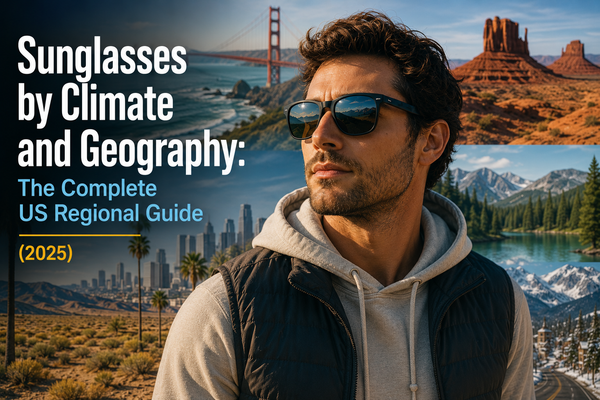
UV intensity, glare conditions, and the right lens spec are not the same in Phoenix as in Seattle. Here’s the complete guide to sunglasses across every US climate and geography.
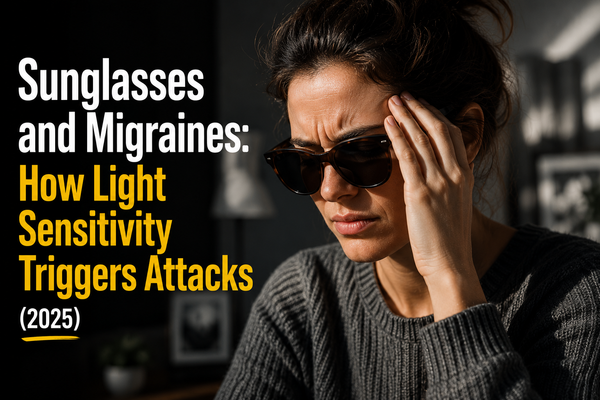
For 39 million Americans with migraine, light is both a trigger and a symptom. Here’s the neuroscience of photophobia, why outdoor glare is a specific risk, and what UV400 polarized lenses actually do about it.
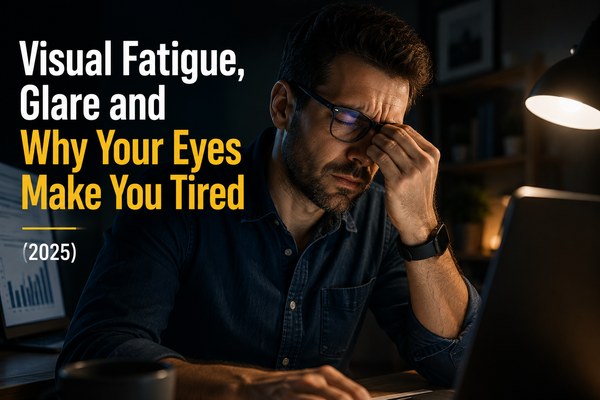
Eye fatigue after a day outdoors isn’t just discomfort — it’s a measurable drain on cognitive performance. Here’s the physiology of visual fatigue, what glare actually does to your brain, and how polarized lenses address it.
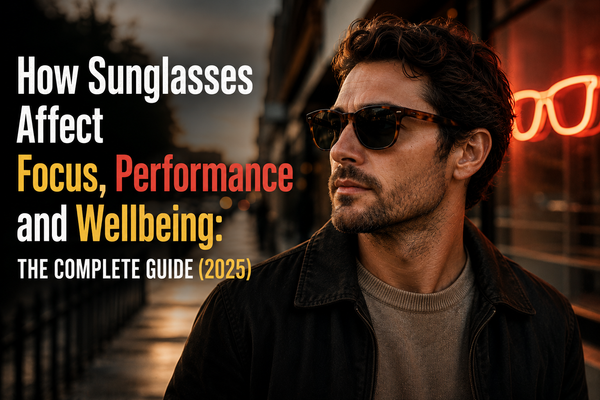
Sunglasses do more than protect your eyes. Research links glare reduction, visual comfort, and UV protection to measurable improvements in focus, athletic performance, and mental wellbeing. Here’s the science.
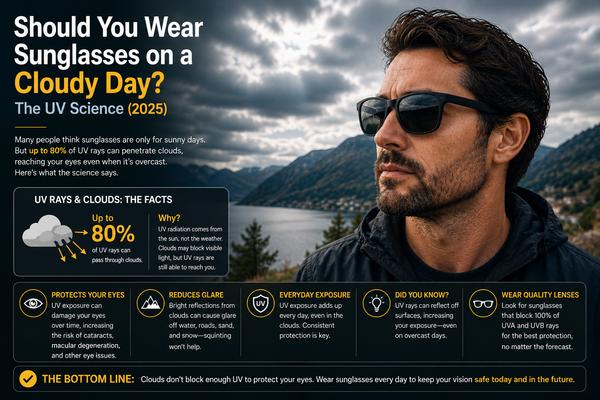
Cloudy skies don’t mean low UV. Here’s the science behind how much UV penetrates cloud cover, why your eyes are still at risk on gray days, and the lightest lens that still protects.
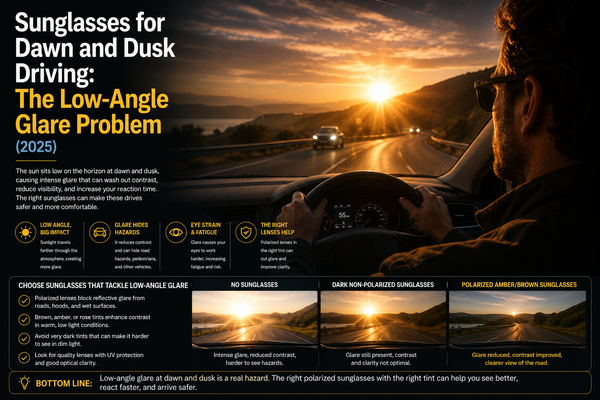
Morning and evening commutes create the most dangerous driving glare of the day. Here’s why low-angle sun is worse than midday sun for drivers, and the exact lens spec that handles it.
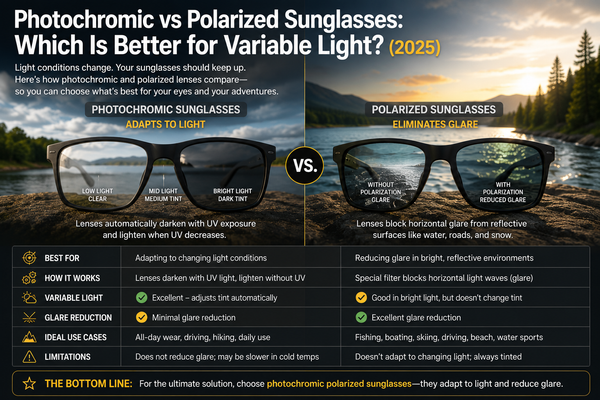
Photochromic lenses adapt automatically. Polarized lenses eliminate glare consistently. Here’s the honest comparison — what each does well, where each fails, and which is right for your specific use.
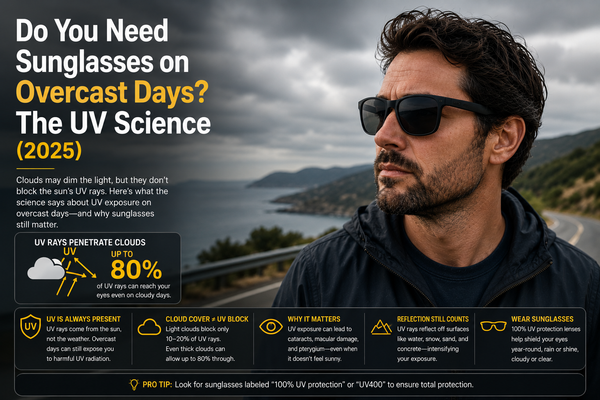
Clouds scatter UV — they don’t block it. Here’s exactly how much UV reaches your eyes on an overcast day, why it still matters, and the lens specification for consistent all-weather UV protection.
Be the first to read about our new arrivals, latest interviews, and newsletter exclusives by signing up below.
