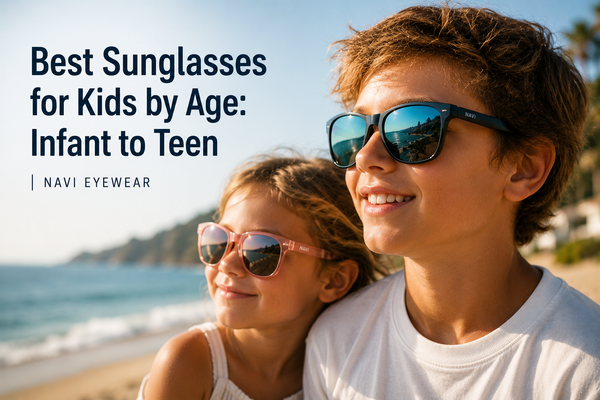
From 6-month-old infants to 17-year-old athletes, the right sunglasses depend on age, face size, activity, and compliance realities. This age-by-age guide covers exactly what to buy and why for every stage of childhood.
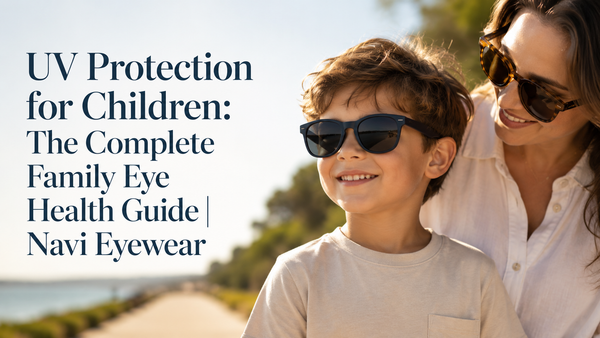
Children's eyes are more vulnerable to UV damage than adults' — and the habits formed in childhood determine lifetime eye health outcomes. This is the complete guide to UV protection for kids of every age, from newborns to teenagers.
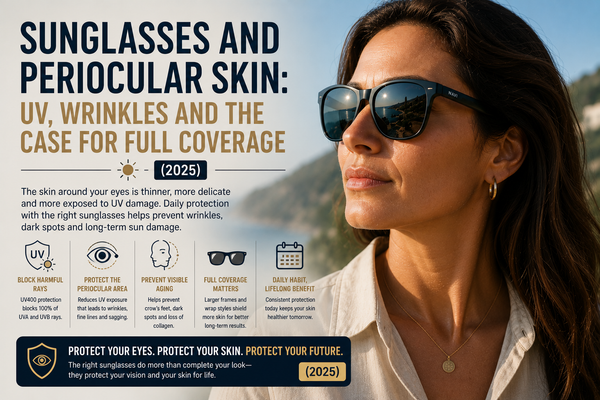
The skin around your eyes is the thinnest on your face and the most UV-vulnerable. Here’s how sunglasses frame coverage protects periocular skin from UV aging, wrinkling, and skin cancer.
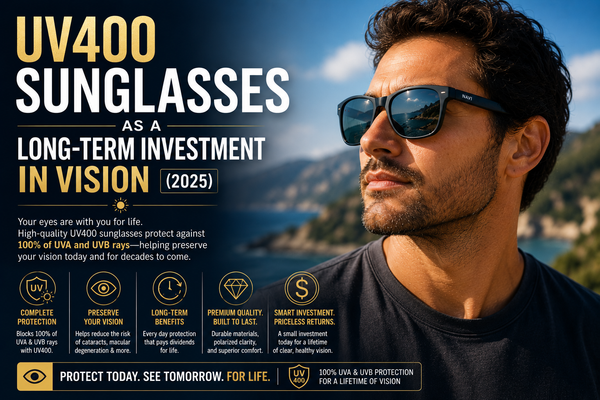
$30 per pair vs $3,500–6,000 per eye for cataract surgery. $30 per pair vs $1,800–2,200 per injection for wet AMD. The ROI case for UV400 sunglasses as a lifetime eye health investment.
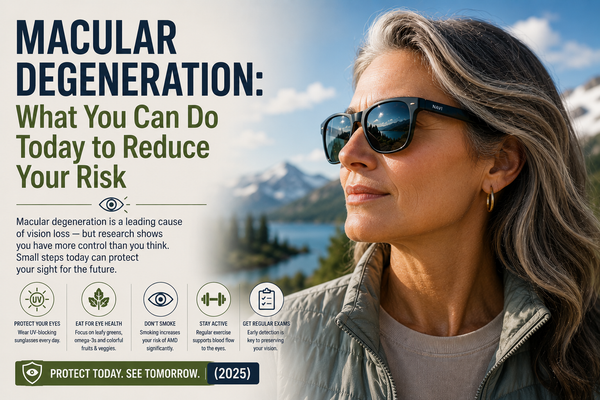
AMD is the leading cause of irreversible vision loss in Americans over 50. It’s also partially preventable. Here’s what the research says about UV, diet, smoking, and the daily habits that matter.
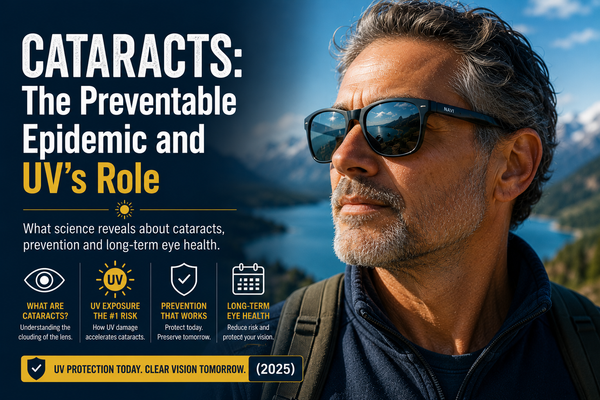
Cataracts affect 24 million Americans over 40. Cataract surgery is the most common procedure in the US. But UV-linked cortical cataracts may be substantially preventable. Here’s the science.
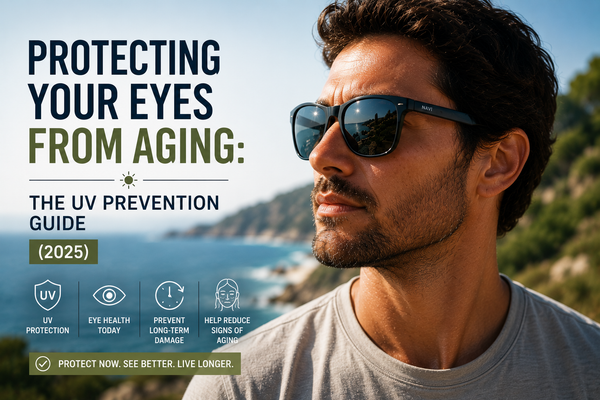
Your vision at 70 is being determined right now by how consistently you wear UV400 sunglasses. Here’s the practical guide to UV-driven eye aging and what you can do at every life stage.
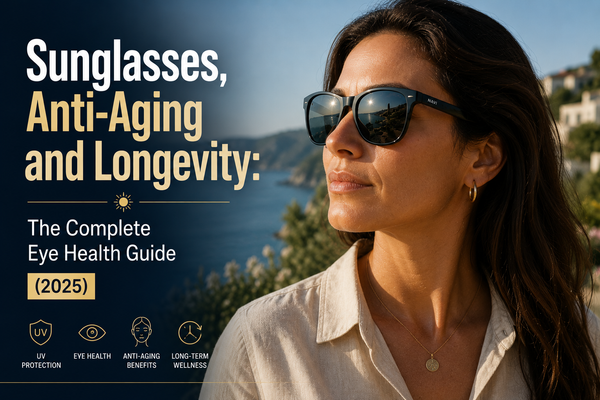
The choices you make in your 20s and 30s determine your vision in your 60s and 70s. Here’s the complete science connecting UV protection, sunglasses, and long-term eye health — from cataracts to macular degeneration to periocular skin.
Flat terrain, big skies, and four full UV seasons. Here’s why the Great Plains and Midwest have their own specific sunglass needs — and the specification for every condition from Kansas summer to Minnesota winter.
Caribbean beaches, Mexican resorts, and Hawaii deliver UV Index 11–12+ year-round. Here’s the complete tropical travel sunglass guide: what to bring, what you’ll need there, and what most travelers leave at home.
Altitude multiplies UV. Snow doubles it. A Colorado ski slope at 10,000 feet gets more UV than a Florida beach in July. Here’s the complete high-altitude sunglass guide.
Seattle and Portland look gray most of the year — but overcast days still deliver real UV and wet roads still produce dangerous glare. Here’s the Pacific Northwest sunglass guide.
Be the first to read about our new arrivals, latest interviews, and newsletter exclusives by signing up below.
