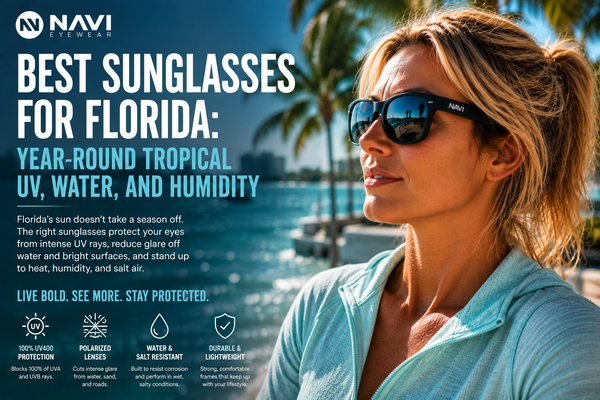
Florida has one of the highest year-round UV indexes in the continental US — tropical latitude, flat terrain with no shade, water reflection from ocean, gulf, and inland waterways, and a lifestyle built around outdoor activity. This guide covers the right lens spec for Florida's specific UV environments from Miami to the Panhandle.
California's UV profile is more demanding than most residents realize — year-round high UV index, coastal water reflection, mountain altitude amplification, and a driving culture that puts drivers in direct sun daily. This guide covers the lens spec, tint, and use-case recommendations for California's distinct UV environments from the coast to the Sierras.
Cataract surgery removes the eye's natural UV-absorbing lens and replaces it with an IOL — and the UV protection requirements after surgery depend entirely on which IOL was implanted. This guide covers the post-cataract sunglass requirements, what different IOL types mean for ongoing UV needs, and why UV protection after cataract surgery matters more than most patients realize.
Dry eye disease is worsened by wind exposure and UV-driven ocular surface inflammation — both of which sunglasses address directly. But the frame matters as much as the lens. This guide covers why wraparound geometry is the primary dry eye sunglass intervention, and what the complete spec looks like for dry eye management outdoors.
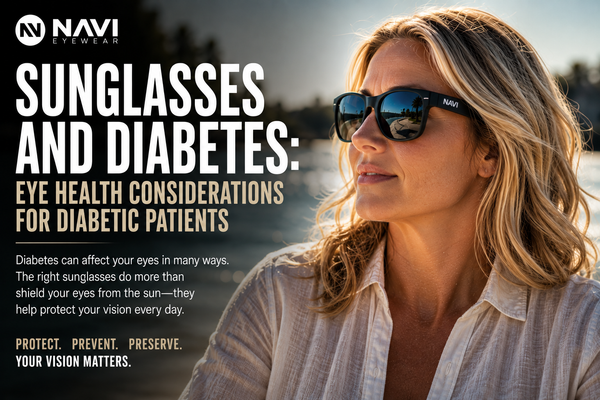
Diabetes affects the eye in multiple ways — accelerated cataracts, diabetic retinopathy, and impaired pupillary response all interact with UV exposure. This guide covers why UV400 protection is more urgent for diabetics, not less, and what the right sunglass setup looks like for diabetic eye health management.
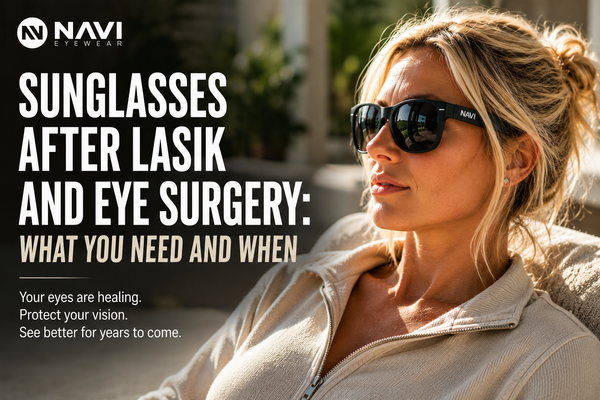
Post-surgical eyes are more UV-sensitive and photophobic during healing. This guide covers the sunglass requirements after LASIK, PRK, cataract surgery, and other common eye procedures — what spec is needed, how long to wear them, and what happens if you don't.
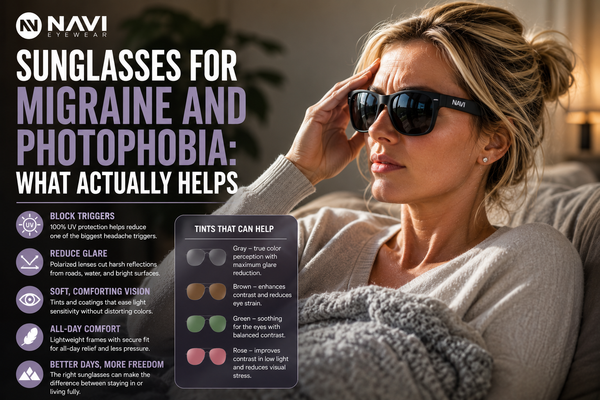
Migraine photophobia has a specific wavelength profile — blue-green light at 480nm drives the most intense pain through the trigeminal pathway. This guide covers what the research shows about migraine and light, which lens tints help and why, and how to build an outdoor sunglass setup that manages photophobia without worsening light sensitivity over time.
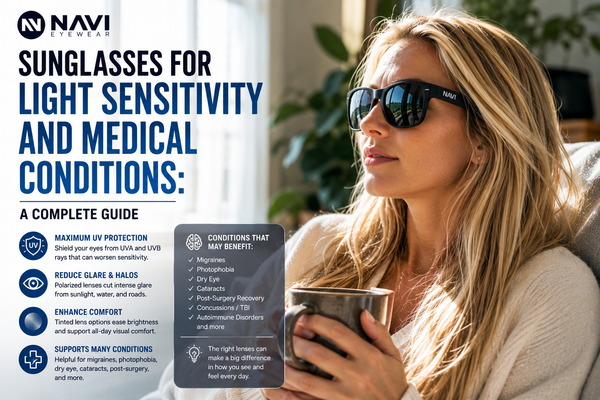
Light sensitivity affects millions of people managing migraines, post-surgical recovery, dry eye disease, neurological conditions, and medication side effects. Sunglasses are a front-line management tool — but the lens spec that helps one condition may be wrong for another. This guide covers the right specification for each medical context.
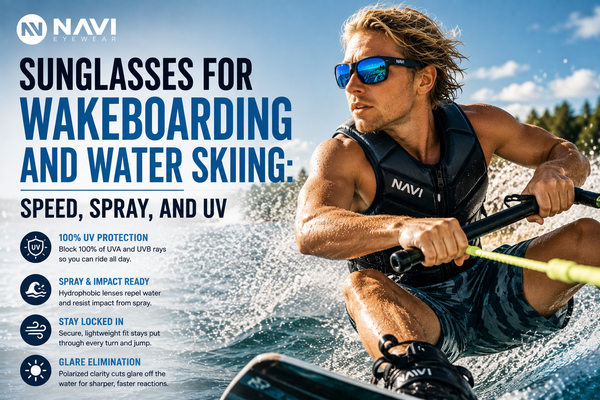
Wakeboarding and water skiing add high-speed airstream and spray to the standard water sport UV challenge — frames that work at dock speed fail at tow speed. This guide covers the retention, lens spec, and frame requirements for tow-sport water sports.
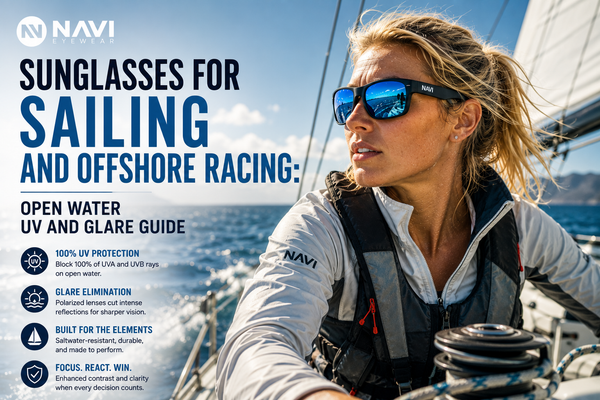
Sailing involves some of the highest sustained UV exposure of any recreational activity — hours of open ocean time with full sky exposure and near-complete water surface reflection. This guide covers the lens spec, tint, and frame requirements for daysailing, offshore racing, and bluewater passages.
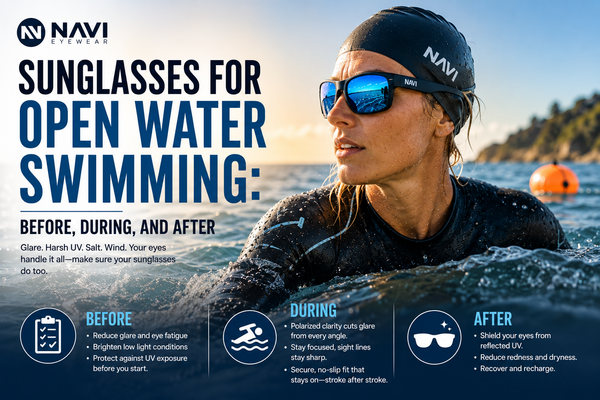
Open water swimming is a unique case — standard sunglasses can't be worn during the swim stroke, but UV exposure before, during transition, and after the swim is substantial. This guide covers what eye protection actually works for open water swimmers at every stage of training and racing.
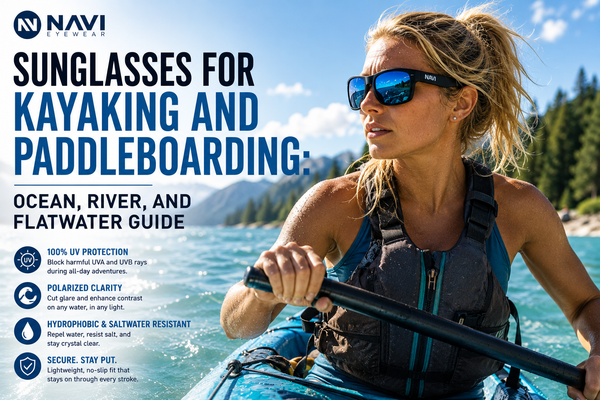
Kayaking and paddleboarding span three very different UV and water environments — ocean coastal, whitewater river, and flatwater inland. Each has different lens tint, retention, and frame requirements. This guide covers the complete spec for each paddling context.
Be the first to read about our new arrivals, latest interviews, and newsletter exclusives by signing up below.
