
Cataracts are the world's leading cause of blindness, and UV exposure is a documented, modifiable risk factor. This guide covers the UV-cataract connection in detail — what the research shows, how UV damages the lens, which cataract types are most UV-related, and what consistent UV400 protection actually reduces.
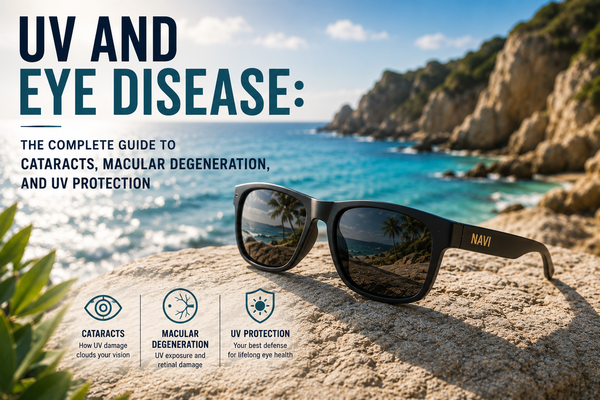
UV radiation is a documented risk factor for cataracts, age-related macular degeneration, pterygium, and photokeratitis. The damage is cumulative, irreversible, and preventable with consistent UV400 protection. This complete guide covers the science of UV eye disease, what the research shows, and what consistent protection actually prevents.

Lens tint color is not a style choice — it's an optical specification that determines how your vision renders color, contrast, and depth in different environments. Gray for accuracy, amber for contrast, copper for water. This guide covers the science behind each tint, what each does to your vision, and how to match tint to use case.

One pair worn inconsistently provides less total UV protection than four pairs worn consistently. The multi-pair strategy isn't about excess — it's about removing the friction that causes gaps in UV protection. This guide covers how many pairs you actually need, where to put them, and how to think about multi-pair ownership as a health strategy.

Face shape is the starting point for frame selection — but fit dimensions matter more than shape categories. This guide covers how to identify your face shape, which frame geometries work best for each shape, and the actual measurements that determine whether a frame fits — so you can choose confidently without trying on 20 pairs.
Polarized lenses eliminate surface glare that non-polarized lenses can't touch — and that difference is immediately perceptible near water, roads, and sand. This guide covers exactly what polarized lenses do that non-polarized don't, when the difference matters most, and the one context where non-polarized is actually the right choice.

A $30 pair of sunglasses and a $300 pair can provide identical UV400 protection — or one can provide it and the other can't. Price is not a reliable indicator of UV protection in sunglasses. This guide covers what cheap sunglasses actually lack, what expensive ones actually add, and where the meaningful quality differences are versus where you're paying for brand.
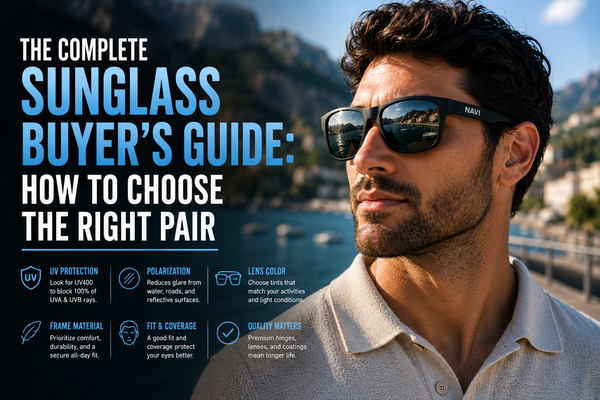
Choosing sunglasses comes down to four decisions: the right UV and lens spec, the right tint for your primary use, the right fit for your face, and the right frame for your activity. This complete buyer's guide covers every decision in sequence — from the non-negotiable specs to tint selection, fit, and frame style — so you can evaluate any pair confidently.
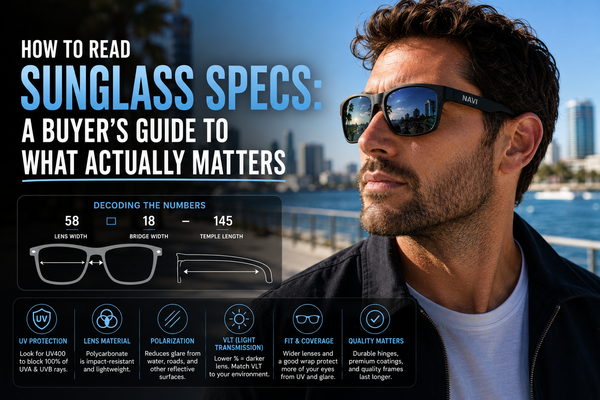
Sunglass product listings are full of terms that sound meaningful but aren't, and missing the specs that actually matter. This guide covers how to read sunglass specifications — what UV400 means, what lens category numbers tell you, which coating claims to verify, and how to spot the difference between marketing language and functional specs.

Modern sunglass lenses have multiple coating layers — hard coat, oleophobic, hydrophobic, anti-saltwater, mirror, and anti-reflective. Each one does something specific. This guide covers what each coating actually does, which ones matter most for different use cases, and how to evaluate coating quality when buying sunglasses.

Polarized lenses don't just darken — they selectively block the specific component of light that causes surface glare. This guide covers the physics of polarization, how PVA film works, why polarized lenses feel different from simply darker ones, and what separates quality polarization from budget film.
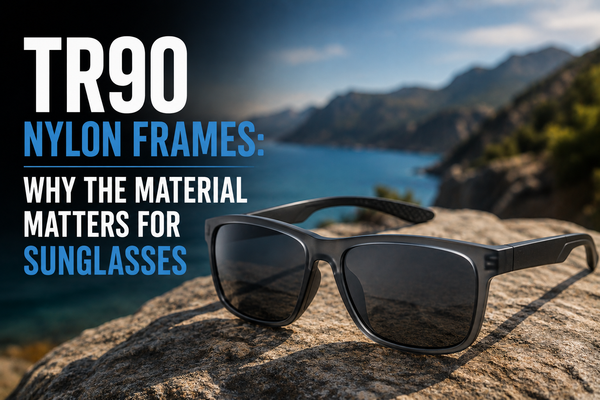
TR90 is the engineering nylon used in quality performance sunglasses — and it earns its place through a specific set of mechanical and chemical properties that acetate, metal, and standard plastics don't replicate. This guide covers what TR90 actually is, what makes it different, and why it's the right frame material for outdoor and active use.
Be the first to read about our new arrivals, latest interviews, and newsletter exclusives by signing up below.
