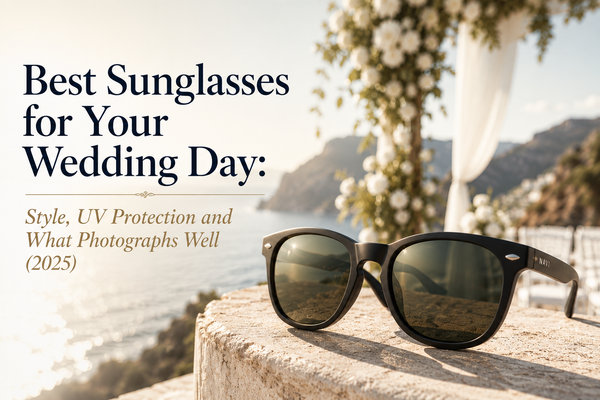

Best Sunglasses for Your Wedding Day: Style, UV Protection and What Photographs Well
Outdoor weddings are beautiful. They are also, from a UV perspective, extended outdoor events at peak daylight hours during summer months when UV index is at its highest. A summer wedding ceremony and reception that runs from noon to evening involves 5–8 hours of outdoor UV exposure for everyone present — the couple, the wedding party, and every guest standing on that sun-drenched lawn.
Sunglasses at a wedding are not just a style accessory. They are appropriate eye protection for an outdoor event, and in summer they are eye protection for a meaningful UV exposure window. The question is not whether to wear sunglasses at an outdoor wedding — it is how to choose a pair that protects your eyes, complements your outfit and the wedding aesthetic, and looks great in the photographs that will exist for the next 50 years.
This guide covers the whole picture: UV protection requirements for outdoor wedding conditions, style guidance for every wedding role from bride and groom to bridesmaids, groomsmen, and guests, what photographs well, and how to approach sunglasses as an intentional part of the wedding aesthetic rather than an afterthought.
This is a C13 Seasonal and Occasion supporting post. It links back to the cluster pillar atthe complete summer sunglasses guide. For the UV science behind outdoor event eye protection, seethe complete guide to UV eye protection.
Quick Answer
For outdoor weddings: UV400 polarized lenses at Category 2 in a frame that complements your wedding outfit and face shape. Gray or light brown polarized for color neutrality in photographs. Clean, classic frame shapes photograph best — aviators, classic ovals, and thin metal frames all work across most wedding aesthetics. Have sunglasses ready for outdoor portions of the day and remove for indoor ceremony shots where light levels make them unnecessary. Polarized lenses reduce the squinting that bright sun produces in photographs.

Table of Contents
Part 1: The UV Reality of Outdoor Weddings
Summer Weddings and Peak UV Hours
The majority of outdoor weddings in the US occur between May and September — precisely the months with the highest UV index of the year. A noon ceremony followed by an outdoor reception running to 6pm places guests in direct sun during the peak UV hours of 10am–4pm for the entire event. At UV index 7–8, which is typical for a clear summer day across most of the United States, this represents several hours of cumulative UV exposure to eyes that are unshaded and looking into a bright outdoor scene.
Reflective Wedding Environments
Outdoor weddings frequently take place in highly reflective environments: manicured lawns with light-reflecting grass, beach and coastal settings with water and sand reflection, garden venues with pale stone and gravel, and marquee or tent receptions with white fabric that bounces light. These environments amplify UV and visible light from multiple directions simultaneously, increasing the UV dose to the eyes beyond what simple overhead exposure would suggest.
Everyone Present Is Exposed
The UV protection case applies to every person at an outdoor wedding, not just the couple. Guests standing on a sunny lawn for a 45-minute outdoor ceremony followed by a garden drinks reception are accumulating hours of UV exposure during some of the highest-UV hours of the year. Providing UV400 eye protection for the wedding party and encouraging guests to wear sunglasses is a genuine act of hospitality at an outdoor summer event.
Part 2: What Wedding Sunglasses Must Do
Part 3: Lens Specification for Wedding Day
UV400 — The Standard
UV400 polycarbonate lenses provide complete UV protection inherently throughout the lens material. They are also FDA-cleared impact-resistant — relevant at any outdoor event with unpredictable physical dynamics. For the UV400 standard and why UV380 is insufficient, seeUV400 vs UV380: what is the difference and why it matters.
Polarization for Wedding Conditions
Polarized lenses are strongly recommended for outdoor wedding wear. The reflective lawn, coastal, garden, and marquee environments described above all produce horizontal surface glare that polarized lenses eliminate. The photographic benefit is specific: polarized lenses reduce the squinting, furrowing, and eye-narrowing that bright surface glare produces in outdoor photographs. People simply look more relaxed and comfortable in photographs taken through polarized sunglasses than in photographs where they are squinting against bright glare. The complete polarization guide is inpolarized vs non-polarized sunglasses: the definitive guide.
Lens Category for Weddings
Category 2 (18–43% VLT) is the optimal wedding lens category. Dark enough to provide genuine UV management and glare reduction in full summer sun; light enough to maintain natural eye appearance in photographs and to transition comfortably as light changes through a long outdoor day. Category 3 (8–18% VLT) is too dark for most wedding photograph scenarios — it creates a strong goggle-like effect and makes eyes appear very dark or invisible in photographs. Category 1 (43–80% VLT) is appropriate for overcast or late afternoon light conditions.
Lens Tint for Wedding Photography
Gray is the most photograph-friendly wedding lens tint. It maintains color neutrality — the scene through gray lenses has natural color balance, which means photographs including the sunglasses do not have an unwanted color cast on the surrounding scene or the wearer’s face. Light brown is also photograph-friendly and adds a warmer tonal quality that suits garden and natural outdoor settings. Avoid very dark amber, blue, or red tints for wedding use — these create strong color casts in photographs that look distracting.
Part 4: Wedding Sunglasses by Role
Bride
Wedding sunglasses for the bride walk the finest line between function and aesthetics. The photograph dimension is most important here: the bride’s sunglasses will appear in more images than anyone else’s. Classic, elegant frame shapes that complement bridal looks — thin metal frames, delicate cat-eye, or clean oval shapes in gold, champagne, or clear acetate — integrate with bridal aesthetics without competing with or overwhelming them. The frame should feel like a considered style choice, not an afterthought. Light Category 2 gray or very light brown polarized UV400 maintains color accuracy and natural eye visibility in photographs.
Groom
Classic aviator, clean rectangular, or thin metal oval frames in silver, gunmetal, or matte black. Gray or light brown UV400 polarized Category 2. The groomsmen aesthetic rewards coordination and simplicity over statement. A clean, classic frame that photographs as part of a coherent look rather than as a distracting style element. Sunglasses that can be tucked into a breast pocket cleanly when not on the face are a practical advantage.
Bridesmaids
Bridesmaid sunglasses can either coordinate with the bride’s choice or express individual style within a coordinated color palette. For weddings with a specific color palette, frame color coordination — all bridesmaids in the same frame shape or a complementary set of shapes — creates a visually coherent wedding party in photographs. The most forgiving approach for group coordination: a single classic frame shape (oval or aviator) with the same lens tint across the group, in frame colors that suit the wedding palette.
Groomsmen
Groomsmen sunglasses coordinate best when they match the groom’s frame style. Identical frames across the groomsmen group, or a common family of shapes (all aviators, all rectangular), creates a cohesive look in wedding party photographs. Classic metal or TR90 frames in a neutral color — silver, gunmetal, matte black — work across most suit and morning coat combinations. Gray polarized UV400 across the group provides visual consistency.
Wedding Guests
Guest sunglasses should serve UV protection and personal comfort without overshadowing the wedding party. Classic shapes in any color that complements the guest’s outfit. The key consideration for guests: Category 2 lenses that are not so dark as to look unwilling to engage, and frames that do not create such a strong visual statement that they become a distraction in background photographs. Any quality UV400 polarized pair in a classic shape is appropriate.
✨ NAVI EYEWEAR — PREMIUM UV400 FOR THE WHOLE WEDDING PARTYUV400 polarized polycarbonate. FDA-cleared. Oleophobic coating. TR90 frames with stainless hardware. Classic, clean, modern styles that work across every wedding role and aesthetic. Buy 1, Get 3 Free — $99 for four pairs (≈$25 each). Free shipping. Free replacements. Coordinate the entire wedding party for less than the cost of one designer pair. Shop the collection:navieyewear.com/collections/polarized |

Part 5: Frame Shapes for Weddings
Aviator
The classic teardrop aviator is one of the most universally flattering frame shapes for outdoor events. It photographs well across most face shapes, looks appropriately premium without being ostentatious, and has a timeless quality that will not appear dated in photographs viewed in 20 years. Slim metal aviators in silver or gold suit both bridal and groomsmen aesthetics. The slim metal construction keeps visual weight low.
Classic Oval
Oval frames — slightly wider than they are tall, with gently curved edges — are the most universally proportional shape for photographs. They suit all face shapes to some degree, they do not create strong geometric statements that compete with formal wedding attire, and they provide good lens coverage geometry for UV protection. In thin metal or TR90 in neutral colors, they are the safe wedding choice across all roles.
Cat-Eye for Bridesmaids and Female Guests
A gently upswept cat-eye frame in a bridesmaid context can complement a feminine bridal aesthetic beautifully. The key word is gently — an extreme cat-eye is a bold style statement that may overwhelm a delicate bridal look. A subtle upswept frame in a complementary color to the bridesmaid dress palette creates a considered, cohesive look that reads as intentional style coordination in photographs.
Thin Metal Rectangular for Grooms and Groomsmen
Slim rectangular metal frames are the clean, masculine wedding sunglass choice. They photograph as a premium understated detail rather than a style statement, they coordinate naturally with suit and morning coat aesthetics, and they have the same timeless quality as aviators. In silver, gunmetal, or gold, they suit most wedding color palettes.
Shapes to Approach Carefully
Very large oversized frames, novelty shapes, and very bright or unusual frame colors can create a strong visual statement that photographs as the most memorable element of a wedding outfit for the wrong reasons. At a wedding — particularly as a guest — the guiding principle is that sunglasses should enhance the look, not define it. For the complete guide to which frame shapes suit which face proportions, seesunglasses for your face shape: the complete guide.
Part 6: What Photographs Well
Polarized Lenses Reduce Squinting
The single most impactful photographic benefit of quality sunglasses at an outdoor wedding is that polarized lenses eliminate the involuntary squinting that bright outdoor conditions produce. Squinting closes the eyes and creates lines across the face that no amount of posing corrects. Polarized UV400 lenses allow the wearer to hold a relaxed, natural expression in bright sun without squinting — which directly improves the quality of outdoor wedding photographs in a way that has nothing to do with the sunglasses themselves being visible.
Gray and Light Brown Lenses Photograph Neutrally
Gray lenses do not add a color cast to the scene captured in photographs. A photographer shooting a wedding party in gray-lens sunglasses sees the same natural color balance in the background as in a shot without sunglasses. Amber, blue, and strongly tinted lenses can create visible color reflections or casts in photographs that are distracting. For any moment where the sunglasses will appear in photographs, gray or very light brown is the photographically safest tint choice.
Clean Frames Without Busy Hardware
Frames with minimal hardware detail — thin temples, simple hinges, no ornate decorative elements — read as clean and elegant in photographs. Frames with heavy decorative hardware, multiple textures, or very prominent logos can appear busy or distracting at close range in photographs. The wedding day sunglass is not the occasion for the most statement pair in the collection.
The Indoor–Outdoor Transition
Professional wedding photographers will ask guests and the wedding party to remove sunglasses for specific posed shots and indoor ceremony photographs. Sunglasses that come off and go back on smoothly, without disrupting hair or outfit, are the practical reality of a wedding day. TR90 frames with lightweight temples that clip cleanly behind the ear work well. Frames that require careful repositioning of hair or outfit details each time they are removed are a practical inconvenience across a long day of multiple indoor-outdoor transitions.
Part 7: Coordinating Sunglasses for the Wedding Party
The Case for Wedding Party Coordination
Coordinated sunglasses across the wedding party create a visually cohesive look in group photographs that reads as intentional style planning. The effect works best when: the frame shape is consistent across the group (all aviators, all ovals), the lens tint matches (all gray polarized), and the frame color coordinates with the wedding palette. The coordination does not need to be identical — variations in frame material or color within a consistent shape family create visual interest while maintaining coherence.
The Practical Case for Navi’s Four-Pair Model
Coordinating sunglasses for a wedding party of four to eight people at standard premium brand pricing would cost $600–$1,500. Navi’s $99 for four pairs makes coordinating the core wedding party — bride, groom, and two bridesmaids, or four groomsmen — a realistic budget item rather than a luxury. For larger wedding parties, two Buy 1 Get 3 Free sets at $198 cover eight people with UV400 polarized quality pairs.
Gifting Sunglasses to the Wedding Party
Wedding party sunglasses as a gift from the couple to bridesmaids and groomsmen is a practical, lasting, and genuinely useful gift that also serves the wedding-day photographic coordination goal. At $25 per pair in Navi’s four-pair deal, this is an accessible gift that delivers both a beautiful accessory for the day and a quality UV400 polarized pair the recipient will use beyond the wedding.
Part 8: Wedding Venue and Condition Guide
|
Venue / Condition |
UV Environment |
Recommended Lens |
Frame Consideration |
|
Garden / lawn — sunny |
UV 7–8, grass reflection |
Gray polarized Cat 2 |
Elegant, classic; complements formal attire |
|
Beach wedding |
UV 8–10, sand + water reflection |
Gray polarized Cat 2–3 |
Secure fit; anti-saltwater coating |
|
Vineyard / estate |
UV 6–8, open terrain |
Gray or light brown Cat 2 |
Classic shapes; coordinates with natural aesthetic |
|
Rooftop / urban terrace |
UV 7–9, building reflection |
Gray polarized Cat 2 |
Modern clean shapes; coordinates with formal wear |
|
Marquee / tent reception |
UV 6–8 outside; shade inside |
Cat 2 for outdoor portions |
Easily removable for indoor sessions |
|
Destination — Mediterranean |
UV 8–10+ |
Gray polarized Cat 3 |
Lightweight frame; max UV protection |
|
Destination — Tropical |
UV 10–12+ |
Gray polarized Cat 3 |
Anti-saltwater; maximum coverage |
|
UK summer wedding (variable) |
UV 4–7, variable cloud |
Gray polarized Cat 2 |
Versatile for sun and cloud transitions |
Part 9: Best For
Gray Polarized UV400 Category 2 — Best For:
Light Brown Polarized UV400 Category 2 — Best For:
Gray Polarized UV400 Category 3 — Best For:
Part 10: Who This Is Not For
Part 11: Common Mistakes
Bottom Line
Outdoor weddings are extended outdoor UV events. The couple and every guest will spend hours in full summer sun at peak UV hours. UV400 polarized sunglasses are appropriate, practical, and visually smart for any outdoor wedding context.
The style dimension matters too — this is the most photographed day of most people’s lives. Gray or light brown UV400 polarized Category 2 in a classic frame shape — aviator, oval, thin metal rectangular, or subtle cat-eye for bridesmaids — provides complete UV protection and photographs beautifully without competing with the wedding aesthetic. The polarized lens specifically reduces the squinting in outdoor photographs that is the most common quality issue with summer outdoor event photography.
For the wedding party, Navi’s Buy 1, Get 3 Free model at $99 makes coordinating four people with quality UV400 pairs an accessible budget item. For couples who want to gift their wedding party something useful and lasting, UV400 polarized pairs at $25 each are a genuinely considered choice that serves both the day and every outdoor day after it.
Browse the full collection atnavieyewear.com/collections/polarized. Add 4 pairs to cart — the Buy 1, Get 3 Free discount auto-applies. Free shipping. Free replacements.

Frequently Asked Questions
Should you wear sunglasses at a wedding?
At outdoor daytime weddings during summer months — yes, unambiguously. An outdoor summer ceremony and reception involves several hours of UV exposure at peak summer UV index, and UV400 sunglasses provide appropriate eye protection for this event. They also reduce the squinting that outdoor sun produces in photographs. The consideration is choosing a style that complements the wedding context rather than competing with it, and removing them appropriately for indoor ceremony shots and specific photographer requests.
What type of sunglasses are best for a wedding?
Classic shapes in thin metal or TR90 frames with gray or light brown UV400 polarized Category 2 lenses. Aviators, clean ovals, and thin rectangular frames photograph well, complement formal wedding attire, and do not compete with the wedding aesthetic. Avoid very dark Category 3 lenses, strong tint colors (amber, blue, red), and very oversized or novelty shapes for any wedding photograph context.
Should the wedding party have matching sunglasses?
Coordination creates a more intentional look in group photographs. Identical frame shapes with the same lens tint — even if frame colors vary slightly — reads as considered styling. Fully matching frames across the entire party (same shape, same lens, same color) creates the most cohesive look. Navi’s four-pair model at $99 makes coordinating four members of a wedding party genuinely budget-accessible.
What lens color is best for wedding photographs?
Gray UV400 polarized is the most photograph-friendly lens tint. Gray lenses maintain color neutrality — no unwanted color cast in the scene behind the wearer. Light brown is a close second and adds a warmer tone that suits natural outdoor settings. Avoid amber, blue, or strongly tinted lenses that create visible color interactions in outdoor photographs.
How dark should wedding sunglasses be?
Category 2 (18–43% VLT) is optimal for most outdoor wedding conditions. Dark enough to provide genuine UV and glare management in summer sun; light enough that eyes remain naturally visible in photographs and comfortable as light conditions change through a long outdoor day. Category 3 (8–18% VLT) is too dark for wedding photograph scenarios in most cases. Category 1 (43–80% VLT) is appropriate for overcast wedding days.
Are polarized sunglasses good for outdoor weddings?
Yes — specifically recommended. Garden, lawn, coastal, and marquee wedding venues all produce horizontal surface glare that polarized lenses eliminate. The practical benefit for wedding photography is that polarized lenses allow natural, relaxed expressions outdoors without the involuntary squinting that bright sun and surface glare produce. The full polarization guide is inpolarized vs non-polarized sunglasses: the definitive guide.
Can I gift sunglasses to my wedding party?
Absolutely — it is a practical, lasting gift that serves the wedding day and every outdoor day afterward. Navi’s Buy 1, Get 3 Free deal at $99 for four pairs makes quality UV400 polarized wedding party gifts accessible at approximately $25 per person. Browse the full collection atnavieyewear.com/collections/polarized.
What sunglasses should wedding guests wear?
Any quality UV400 polarized pair in a classic frame shape and a color that complements the guest’s outfit. The guiding principle for guests: complement the wedding aesthetic rather than compete with it. Classic shapes, neutral tints, Category 2 for outdoor daytime use. The couple and wedding party are the visual center of the day — guest eyewear should support rather than compete with that.
Supporting Articles
UV400 POLARIZED FOR THE WHOLE WEDDING PARTY. $99 FOR FOUR PAIRS.Classic, modern styles that complement every wedding aesthetic. UV400 polycarbonate. Gray polarized. Clean frames that photograph beautifully. Coordinate the wedding party. Gift the bridesmaids. Protect everyone on the big day. Buy 1, Get 3 Free — $99 for four pairs. Free shipping. Free replacements. No code needed. |
SOURCES & CITATIONS[1] World Health Organization.“Solar ultraviolet radiation: global burden of disease from solar ultraviolet radiation.”WHO Environmental Burden of Disease Series, 2006.View source [2] Rosenthal FS, Bakalian AE, Lou CQ, Taylor HR.“The effect of sunglasses on ocular exposure to ultraviolet radiation.”American Journal of Public Health, 1988.View source [3] Taylor HR, West SK, Rosenthal FS, et al..“Effect of ultraviolet radiation on cataract formation.”New England Journal of Medicine, 1988.View source [4] De Faber JT, Naeser K, Kessing SV.“Polarized light and contrast sensitivity under glare conditions.”Ophthalmic Research, 2013.View source [5] Dain SJ.“Sunglasses and sunglass standards.”Clinical and Experimental Optometry, 2003.View source [6] American Academy of Ophthalmology.“Sunglasses: choosing the right pair for UV protection.”AAO EyeSmart, 2023.View source |