
Best Sunglasses for Hiking & Outdoor Adventures
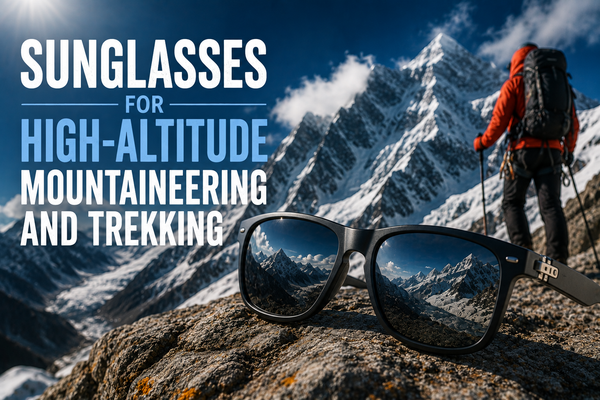
Hiking is one of the most demanding environments for sunglasses. Unlike driving, where you are shielded by a windscreen and moving in a fixed direction, hiking puts you in open terrain with UV coming from above, reflected from below on snow and rock, shifting between exposed ridgelines and shaded forest, and sustained across four to eight hours of continuous outdoor time. The sunglasses that work adequately for a walk around town are often badly outmatched on a full mountain day.
This guide covers what hiking and outdoor adventures specifically demand from eyewear — UV protection at altitude, contrast for terrain reading, fit security under movement, and durability through sweat and weather — and how to match those demands to the right lens and frame specifications.
This is a C3 Activity and Sport supporting post. For the complete framework covering every outdoor sport and the specifications each requires, seethe complete outdoor and sport sunglasses guide. For the UV science that underpins why altitude and extended exposure create a meaningfully different risk profile, seethe complete guide to UV eye protection.

Why Hiking Demands More From Sunglasses Than Everyday Use
UV Intensity at Altitude
UV intensity increases by approximately 10–12% per 1,000 metres of elevation above sea level. At a moderate hiking altitude of 2,000 metres — accessible on countless trails across North America, Europe, and beyond — UV levels are 20–25% higher than at sea level. At alpine elevations of 3,000–4,000 metres, the increase reaches 30–50%. Add the reflective contribution of exposed rock, light-coloured scree, and snow patches, and total ocular UV on a full alpine day can be dramatically higher than the urban baseline most people are accustomed to. The year-round nature of this altitude UV risk is discussed in depth inwinter UV protection and why cold weather does not reduce exposure.
Extended Continuous Exposure
A typical day hike involves 4–8 hours of continuous outdoor UV exposure. Even at sea level, 8 hours of unprotected sun exposure represents a significant daily UV dose. At altitude with partial snow cover, the equivalent dose can approach what a beach day delivers — concentrated into a single continuous session with no indoor breaks. UV accumulates cumulatively across a lifetime. Every unprotected hike contributes to the long-term burden.
Variable Terrain and Light Conditions
Trail hiking involves constant transitions between open exposed terrain with intense direct sun, shaded forest sections, rock faces that reflect light from unusual angles, stream crossings with glare, and south-facing slopes that concentrate UV. A pair of sunglasses that works well in one condition may underperform in another. This is why tint choice and polarization matter more on the trail than in many other contexts — they determine how well the lens handles the full range of conditions encountered in a single day.
Physical Demands on Frame and Lens
Hiking generates sweat, places equipment under physical stress, subjects frames to temperature extremes between sun and shade, and often involves contact with vegetation, rock, and pack straps. Frames that fit securely on a flat street may slide on a steep ascent. Lens coatings that hold up fine in daily use may not tolerate a full day of perspiration and trail dust without degrading performance. Build quality and material selection matter more for extended trail use than for casual outdoor wear.
What Hiking Sunglasses Actually Need: The Specifications
|
UV Protection Standard: UV400 — 100% UVA and UVB blocking Priority: Non-negotiable at any altitude
UV400 certification is the baseline for all outdoor use. At hiking altitudes, the margin between adequate and inadequate UV protection narrows — cumulative UV dose per hour is higher, sessions are longer, and reflective surfaces can amplify exposure from unexpected angles. Polycarbonate lenses, which provide inherent UV protection regardless of surface condition, are the preferred material for trail use — unlike CR-39 lenses with surface UV coatings, polycarbonate UV protection cannot be degraded by scratches or wear. The full technical explanation of how UV protection works inside the lens is inhow sunglass lenses actually work. |
|
Lens Tint Primary recommendation: Brown or Amber Alternative: Green for mixed terrain in gentler light High altitude snow: Mirrored amber or brown, Category 3
Brown and amber tints are the preferred choice for hiking for a specific and well-grounded reason: they enhance contrast by selectively filtering blue light scatter. On a trail, this means rock edges, roots, and surface changes are rendered with greater definition than through a neutral gray lens — directly reducing the risk of foot placement errors and improving terrain reading in variable lighting. For trail running specifically, where fast foot placement decisions are critical, the contrast enhancement of amber or brown over gray is a functional performance difference, not just a visual preference. The full tint science is inthe science of lens color and what tint your vision actually needs. |
|
Polarization Recommendation: Strongly recommended Priority environments: Any trail with water crossings, snow, or wet rock
Polarized lenses eliminate horizontally reflected glare from water crossings, wet rock faces, stream surfaces, and snow patches. On dry technical terrain, the contrast benefit of polarization over standard dark lenses is meaningful. On wet terrain or near water, it is transformative — allowing clear vision of surface depth and texture that glare obscures with non-polarized lenses. For the full case for polarization in outdoor environments, seepolarized sunglasses: are they worth it. |
|
Frame Fit and Security Material: TR90 nylon or Grilamid — lightweight and flexible Key features: Rubberised nose pads, temple grips, wraparound base curve
Fit security during hiking is both a comfort and safety issue. On a steep ascent or technical descent, sunglasses that slide are a distraction — and at a critical moment, a real hazard. Rubberised nose pads and temple grips maintain friction with perspiring skin. A higher base curve (4-8 base) that wraps closer to the face reduces peripheral light entry and keeps the lens in the correct position during movement. Temple grips with slight outward flare at the tip prevent rearward sliding on downhill sections where the frame tends to shift forward. |
|
Lens Coatings Essential: Scratch-resistant hard coat, hydrophobic Recommended: Anti-reflective on back surface
Hiking puts lenses in contact with vegetation, pack straps, and hands far more than everyday use. A scratch-resistant hard coat extends lens life meaningfully. Hydrophobic coatings keep sweat and rain from spreading across the lens surface, maintaining optical clarity during exertion. Back-surface AR coating eliminates light bouncing off the inner lens surface — particularly relevant on exposed ridgelines where light arrives from all angles. The full breakdown of coating types, how they work, and how to maintain them is inlens coatings explained. |
Matching Specification to Condition
|
Condition |
UV Risk |
Recommended Tint |
Lens Category |
Key Feature |
|
Forest / shaded trail |
Moderate |
Amber or Green |
Cat 2 |
Contrast in low light |
|
Open mountain terrain |
High |
Brown or Amber |
Cat 3 |
Polarized, UV400 |
|
High alpine / snow patches |
Very High |
Amber + Mirror |
Cat 3–4 |
Maximum coverage |
|
Coastal trail / cliff path |
High |
Gray or Amber |
Cat 3 |
Polarized for sea glare |
|
Desert / arid open terrain |
Very High |
Brown or Gray |
Cat 3 |
Hydrophobic coating |
|
Variable mixed terrain all-day |
High |
Amber |
Cat 3 |
Polarized, secure fit |
What to Avoid When Choosing Hiking Sunglasses
Fashion frames with flat lenses and wide temple gaps leave significant peripheral UV entry paths open — above the frame and from the sides. On exposed terrain, this is a meaningful protection gap. Acetate frames, while excellent for everyday style, become brittle in cold and warp in heat — neither property is suitable for a full alpine day. Very dark Category 4 lenses are appropriate for glacier travel but create dangerous adaptation problems when moving between bright exposed terrain and shaded forest or rock. And for any hike longer than two hours, avoid lenses without a scratch-resistant coating — the contact with vegetation, hands, and pack straps that occurs during a typical day will visibly degrade an uncoated lens. The environmental and quality case for avoiding cheap lenses on technical outdoor use is also made inthe environmental cost of cheap sunglasses.
Hiking With Prescription Lenses
Prescription hikers have the same options as all prescription outdoor athletes: prescription polarized sunglasses in polycarbonate (the optimal combination), contact lenses plus non-prescription sport sunglasses (the most flexible approach for day hikes), or OTG designs for occasional use. For technical or extended alpine hiking, prescription polarized sunglasses are the preferred choice — they eliminate the optical compromise of wearing anything over prescription glasses during demanding terrain. The full options breakdown is inhow to layer eyewear: sunglasses, goggles, and prescription lenses.
Browse theNavi Eyewear UV400 polarized collection for trail-ready polarized sunglasses. For building a complete outdoor eyewear setup that covers hiking, driving, and water without buying separate pairs for each activity,the guide to building a complete sunglasses collection covers how to approach multi-activity coverage efficiently.
Frequently Asked Questions
Do I need polarized sunglasses for hiking?
Not strictly required on all trails, but strongly recommended for most hiking. Polarized lenses eliminate reflected glare from water crossings, wet rock, and snow — all common trail features — and improve terrain contrast in variable lighting. On dry forest trails in flat light, polarization provides a smaller benefit. On exposed mountain terrain, near water, or in alpine conditions with snow, it makes a meaningful difference to both comfort and vision quality. The full case is inpolarized sunglasses: are they worth it.
What lens tint is best for hiking sunglasses?
Brown or amber for most hiking conditions. These tints enhance contrast by filtering blue light scatter, making trail surface features — rocks, roots, terrain changes — stand out with greater definition than neutral gray lenses. This contrast enhancement is a functional benefit for terrain reading, not just visual comfort. For high-altitude hiking on snow, a mirrored amber or brown at Category 3 adds brightness reduction on top of the contrast benefit. The full tint guide is inthe science of lens color and what tint your vision actually needs.
How much does UV increase with altitude when hiking?
UV intensity increases by approximately 10–12% for every 1,000 metres of elevation above sea level. At 2,000 metres — a moderate alpine hiking altitude — UV is roughly 20–25% higher than at sea level. At 3,500 metres, the increase can reach 35–45%. Combined with the reflective contribution of exposed rock and snow, total ocular UV on a high alpine day can be two to three times the equivalent ground-level dose. UV400 certified sunglasses are essential at any significant hiking elevation.
What frame material is best for hiking sunglasses?
TR90 nylon or Grilamid. Both are lightweight, highly impact-resistant, flexible under impact rather than brittle, and maintain their properties across the temperature range encountered in outdoor hiking — from cold alpine mornings to sun-exposed afternoon ridgelines. They accept rubberised grip materials effectively, which is essential for maintaining fit security during physical exertion. Avoid acetate frames for serious hiking: acetate becomes brittle in cold, warps in heat, and does not grip perspiring skin.
Can I use regular everyday sunglasses for hiking?
For easy, low-altitude day walks on clear paths, everyday sunglasses with UV400 certification provide adequate UV protection. For technical trails, alpine terrain, extended duration, or any elevation above 1,500 metres, everyday sunglasses typically fall short on fit security, frame durability, coverage geometry, and lens contrast performance. The sunglasses that feel fine on a city walk will often slide on a steep ascent, sit too far from the face to manage peripheral UV, and fail to deliver the contrast enhancement that makes trail reading safe. See7 signs your sunglasses are not protecting your eyesto check whether your current pair meets the minimum standard.
Should I wear sunglasses while hiking in winter?
Yes — winter hiking is often the highest UV environment of all. Snow reflects up to 80–90% of UV back toward your face, and altitude amplifies UV further. Winter hikers on snow-covered trails or above the snowline can encounter some of the highest ocular UV doses available outside a glacier environment, even in cold temperatures. The full science of winter UV and why cold weather does not reduce UV exposure is inwinter sunglasses and why UV protection does not stop in cold weather.
How do I stop hiking sunglasses from fogging up?
Fogging during hiking is caused by warm, moist air from the body meeting a cold lens surface — most common during high-output ascents and in cold weather. The most effective fixes are: choose frames with a higher base curve that sit further from the face allowing airflow, avoid frames that seal tightly against the cheeks and brow, and look for lenses with anti-fog coating if fogging is a consistent issue in your conditions. Storing sunglasses in a warm place (a chest pocket rather than a bag) before use reduces the temperature differential that triggers fogging.
SOURCES & CITATIONS[1] Moehrle M."Ultraviolet exposure in the Ironman triathlon."Medicine and Science in Sports and Exercise, 2001.View source [2] Sliney DH."UV radiation ocular exposure dosimetry."Documenta Ophthalmologica, 1994.View source [3] Perugini P, Vettor M, Rona C, et al.."Efficacy of sunscreens in protecting the ocular area of mountaineers."Dermatology, 2002.View source [4] Coroneo MT, Muller-Stolzenburg NW, Ho A."Peripheral light focusing by the anterior eye and the ophthalmohelioses."Ophthalmic Surgery, 1991.View source [5] Taylor HR, West SK, Rosenthal FS, et al.."Effect of ultraviolet radiation on cataract formation."New England Journal of Medicine, 1988.View source [6] Dain SJ."Sunglasses and sunglass standards."Clinical and Experimental Optometry, 2003.View source [7] De Faber JT, Naeser K, Kessing SV."Polarized light and contrast sensitivity under glare conditions."Ophthalmic Research, 2013.View source [8] Rosenthal FS, Phoon C, Bakalian AE, Taylor HR."The ocular dose of ultraviolet radiation to outdoor workers."Investigative Ophthalmology and Visual Science, 1988.View source |