
How to Clean & Care for Sunglasses: The Complete Step-by-Step Guide
The most common way people destroy quality sunglass lenses has nothing to do with dropping them or sitting on them. It is cleaning them incorrectly — specifically, wiping a dry lens with a shirt, a paper towel, or whatever fabric is closest at hand. This habit, repeated a few times a week, produces micro-scratches across the lens surface that accumulate over months into visible degradation that no amount of later correct cleaning can reverse.
Correct cleaning takes approximately sixty seconds and requires two items. This post covers the full protocol — everyday cleaning, post-activity care for salt water, sweat, and sunscreen, what to absolutely avoid, and the storage habits that protect your investment when the glasses are not on your face.
This is a C6 Care and Maintenance supporting post. For the broader maintenance picture including frame care, hinge maintenance, repair vs replace decisions, and the annual inspection protocol, seethe complete sunglasses care and maintenance guide. For the lens coating science that explains why these cleaning rules matter, seelens coatings explained.

What You Need: The Complete Cleaning Kit
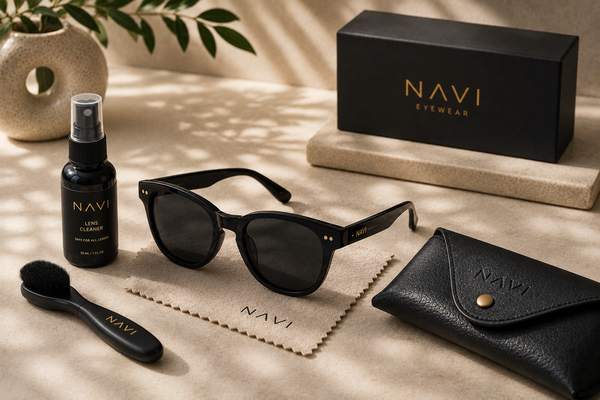
A complete sunglass cleaning kit requires exactly three items:
|
⚠ Items That Damage Lens Coatings — Never Use These Paper towels, tissues, napkins: surface texture is abrasive at the microscopic level relative to lens coatings. // Clothing and shirt fabric: cotton and synthetic fabrics both carry abrasive particles from washing and wear. // Alcohol-based cleaners (including many phone screen cleaners): dissolve hydrophobic and oleophobic coatings on contact. // Window cleaner (Windex and equivalents): contains ammonia and alcohol — both damaging to lens coatings. // Household glass cleaner: same issue as window cleaner. // Acetone / nail polish remover: dissolves lens coatings and can attack lens material. // Silicone-based products: temporarily improve slip but progressively degrade oleophobic surfaces. // Hot water above approximately 50°C: thermal stress on coatings accelerates degradation and can cause AR coating crazing. |
The Standard Cleaning Protocol: Step by Step
|
Step 1: Rinse with lukewarm running water Hold the lenses under lukewarm running water for 5–10 seconds. This floats off surface dust, grit, and loose particles before any physical contact with the lens. This step is not optional — skipping it and going straight to wiping is the primary mechanism of micro-scratch accumulation. The rinse removes the particles that would otherwise be dragged across the coating under wiping pressure. |
|
Step 2: Apply cleaning solution or mild soap Apply 2–3 sprays of lens cleaning solution to each lens surface, or a single drop of mild dish soap if cleaning solution is unavailable. Spread gently with a fingertip to distribute evenly. Do not use more than needed — excess cleaner requires more wiping to remove and adds no cleaning benefit. |
|
Step 3: Wipe with a clean microfibre cloth Using a clean microfibre cloth, wipe each lens in gentle circular motions from the centre outward. Use light, even pressure — vigorous scrubbing is unnecessary and increases the risk of micro-scratching if any residual particles remain despite the rinse. Clean both surfaces of each lens, including the inner surface that faces the eye. Pay attention to the edges where the lens meets the frame — oils and debris accumulate there and are often missed. |
|
Step 4: Rinse again A second rinse with lukewarm water removes cleaner residue and any remaining loosened particles. This step matters because cleaning solution left on the lens surface can leave streaks as it dries, and dried soap residue on a hydrophobic coating can temporarily reduce its water-beading performance. |
|
Step 5: Dry by blotting, not wiping Use a second, dry, clean microfibre cloth to blot — not wipe — excess water from the lens surface. Blotting absorbs water without dragging the cloth across the surface under friction. If a second cloth is unavailable, allow the lenses to air-dry in a clean, dust-free location. Never shake water off the lenses — the motion can flex the frame and deposit water onto the inner surface of the lens. |
Post-Activity Cleaning: Sport, Sea, and Sunscreen
After Salt Water
Salt water exposure requires immediate fresh water rinsing — before salt can crystallise on the lens surface. Crystallised salt is mildly abrasive and, if wiped across the lens before rinsing, will scratch the coating. The rule: rinse with fresh water immediately after any salt water contact, then follow the standard cleaning protocol. This applies to beach use, ocean swimming, and any marine environment. The specific maintenance demands of marine and water sport use are covered in depth insunglasses for water sports: why polarization is non-negotiable.
After Sweating
Sweat contains salts, oils, and acidic compounds that deposit on both lens surfaces and frame material during sport use. The residue is particularly corrosive to lens coatings and metal frame hardware when allowed to dry and concentrate. After any activity involving significant perspiration: rinse lenses with water before wiping, clean with the standard protocol, and rinse the nose pads and temple grips separately — sweat accumulates there and degrades rubber grip materials over time if not removed.
After Sunscreen Contact
Sunscreen is the most chemically aggressive common contaminant for sunglass lenses. Many sunscreen formulations contain chemical UV filters and emulsifying agents that actively degrade hydrophobic and oleophobic coatings on contact. If sunscreen reaches the lens surface — through hand contact, facial application migration, or splash — clean promptly with the standard protocol and rinse thoroughly. Repeated sunscreen exposure without adequate cleaning is one of the most common causes of premature hydrophobic coating failure. This is discussed in the context oflens coatings explained: why hydrophobic coatings degrade and how to extend their life.
After Driving in Rain or Spray
Road spray contains road film, oils, and fine grit that deposit on the outer lens surface. After driving in rain or through spray, the outer lens surface should be cleaned with the standard protocol before the residue dries and hardens on the surface. Hydrophobic coatings handle water droplets well, but road film and oil-contaminated spray require cleaning solution rather than water alone.
Cleaning the Frame: Often Neglected, Always Important
Nose Pads
Nose pads accumulate skin oils, cosmetics, and sweat that degrade both the silicone or rubber material and the underlying nose pad screws. Wipe nose pads with a damp microfibre cloth during every lens cleaning session. For silicone nose pads that have turned yellow from skin oil accumulation, a brief soak in mild soap solution followed by gentle scrubbing with a soft toothbrush restores appearance and hygiene.
Hinges and Temple Grips
Hinge barrels and the area around hinge screws collect debris that accelerates wear on the hinge mechanism. During the cleaning session, run a damp corner of microfibre cloth along the hinge area and through the screw recess to remove accumulated grime. For rubberised temple grips, clean with mild soap and water — never with alcohol-based cleaners, which degrade rubber over time.
The Frame Exterior
Acetate frames can be wiped with a damp microfibre cloth and mild soap. Avoid any solvent-containing cleaner on acetate — solvents attack the surface finish and can cloud the frame's colour or texture. TR90 and metal frames are more chemically tolerant and can be cleaned with the standard lens cleaning solution. Frame cleaning is particularly important after beach, sport, and any environment with heavy perspiration or chemical exposure. The material-specific care details for acetate, TR90, and metal frames are in thecomplete care and maintenance guide.
Travel Cleaning: When You Don't Have Your Kit
When travelling, you may not have access to your standard cleaning kit. The best available alternatives in order of preference:
Browse theNavi Eyewear UV400 polarized collection — all pairs include a microfibre pouch and hard case as standard, providing the basic cleaning and storage kit for everyday and travel use. For the complete picture of what extends lens and frame life from purchase to end of use, seethe complete sunglasses care and maintenance guide.
Frequently Asked Questions
How do you clean sunglasses without scratching them?
Always rinse with lukewarm water before any physical contact with the lens — this removes surface particles that would otherwise be dragged across the coating under wiping pressure. Use a clean microfibre cloth only — never paper towels, tissues, or clothing. Apply lens cleaning solution or mild dish soap before wiping. Use gentle circular pressure, not scrubbing. These four habits prevent the vast majority of cleaning-related lens scratching.
Can I use a shirt to clean my sunglasses?
No — this is the most common cause of micro-scratch accumulation on quality lenses. Clothing fabric, including soft cotton, carries microscopic abrasive particles from washing, wear, and environmental exposure. At the microscopic scale relative to lens coatings, dragging fabric across a lens surface without prior rinsing and lubrication produces hundreds of tiny scratches per wipe. Each individual scratch is invisible, but the cumulative effect after weeks of this habit is visible lens haze. Always use a clean microfibre cloth, always after a water rinse.
What can I use to clean sunglasses if I don't have lens cleaner?
A single drop of mild dish soap diluted in lukewarm water is the best readily available alternative. It is a surfactant solution that breaks down oils and fingerprints identically to commercial lens cleaner. Apply a drop to the wet lens, spread gently, wipe with microfibre, and rinse thoroughly to remove all soap residue. Plain water alone is adequate for removing light dust between full cleans. Avoid hand sanitiser, window cleaner, alcohol wipes, and any household cleaner — all damage lens coatings.
How often should I clean my sunglasses?
After every use that involves significant exposure to sweat, salt water, sunscreen, or road spray — these substances are actively damaging to coatings and should be removed promptly. For everyday casual use, a full clean every one to three days is adequate. Visible smearing, oiliness, or reduced water-beading on the outer surface are signs that cleaning is overdue. The frame, nose pads, and hinges benefit from a thorough clean weekly.
Why do my sunglasses always look smeared after cleaning?
Smearing after cleaning typically has one of three causes: insufficient rinsing before wiping (residual oils are redistributed rather than removed), cleaning solution or soap residue left on the lens after wiping (requires a second rinse), or a contaminated microfibre cloth spreading oils back onto the lens (wash cloths regularly). A contaminated cloth is the most common cause — microfibre cloth that has been used to wipe a phone screen, table surface, or sweaty face accumulates oils that transfer back to the lens. Keep sunglass-dedicated microfibre cloths separate from general-purpose ones and wash them weekly.
How do I clean sunglasses after swimming in the sea?
Rinse immediately with fresh water — before salt crystallises on the surface. This is the most time-sensitive step. Salt crystals that form on the lens surface are mildly abrasive and will scratch the coating if wiped before rinsing. After the fresh water rinse, follow the standard cleaning protocol with lens cleaning solution and microfibre. Rinse the frame, nose pads, and hinges separately — salt deposits on hardware accelerate corrosion.
Can I clean sunglasses with hot water?
No — use lukewarm water only. Hot water above approximately 50°C creates thermal stress on lens coatings, which expand and contract at different rates than the underlying lens material. Repeated hot water exposure accelerates crazing — the spider-web surface cracking that indicates AR coating failure. Lukewarm water (comfortable on the hand) is the correct temperature for every lens rinse.
SOURCES & CITATIONS[1] Citek K."Anti-reflective coatings reflect ultraviolet radiation."Optometry, 2008.View source [2] Dain SJ."Sunglasses and sunglass standards."Clinical and Experimental Optometry, 2003.View source [3] Tanner DF, Kent JS, Jagger JD."Spectral transmittance characteristics of commercially available UV-protective sunglass lenses."Optometry and Vision Science, 2007.View source [4] American Academy of Ophthalmology."Sunglasses: protecting your eyes from UV radiation."AAO EyeSmart, 2023.View source |